Print at Actual size / 100% with browser headers and footers turned off. Only whole systems that fit are drawn; reduce the system count or spacing if you need more room.
Name treble and bass notes by reading the clef first
Print note-letter exercises that alternate treble and bass staves, with a matching answer view for checking. The default page has six systems of eight natural staff notes. Use a landmark and move through adjacent lines and spaces, then explain the position before checking the answer letter.
- Default page
- 6 systems with 8 notes each: 48 notes
- Clef sequence
- Treble, bass, then repeat
- Pitch scope
- Natural notes within the five-line staff
- Answer format
- Letter names only, without octave numbers
Start in three steps
- 01
Prepare a manageable page
Set the title, A4 or Letter size, system count and spacing for the learner.
- 02
Keep two matching views
Download Exercises, then Answer key with exactly the same layout settings.
- 03
Attempt before comparing
Print one clear copy and check four answers at a time using clef landmarks.
Know what the exercise is asking
The default sheet contains six systems with eight note positions in each. The systems alternate treble and bass clef so that the same page practises two reading references. The task is to supply the note letter beneath each symbol. The worksheet uses natural staff notes; it is not an exercise in accidentals, key signatures or identifying a sounding octave from a recording.
A note’s letter depends on its clef and position, so read the clef at the start of every system. The same line does not mean the same note in treble and bass. The answer key gives letters rather than a complete pitch-and-octave label. If you want learners to include octave numbers, state that extra task clearly and provide the convention you expect them to use.
Find a landmark, then move by steps
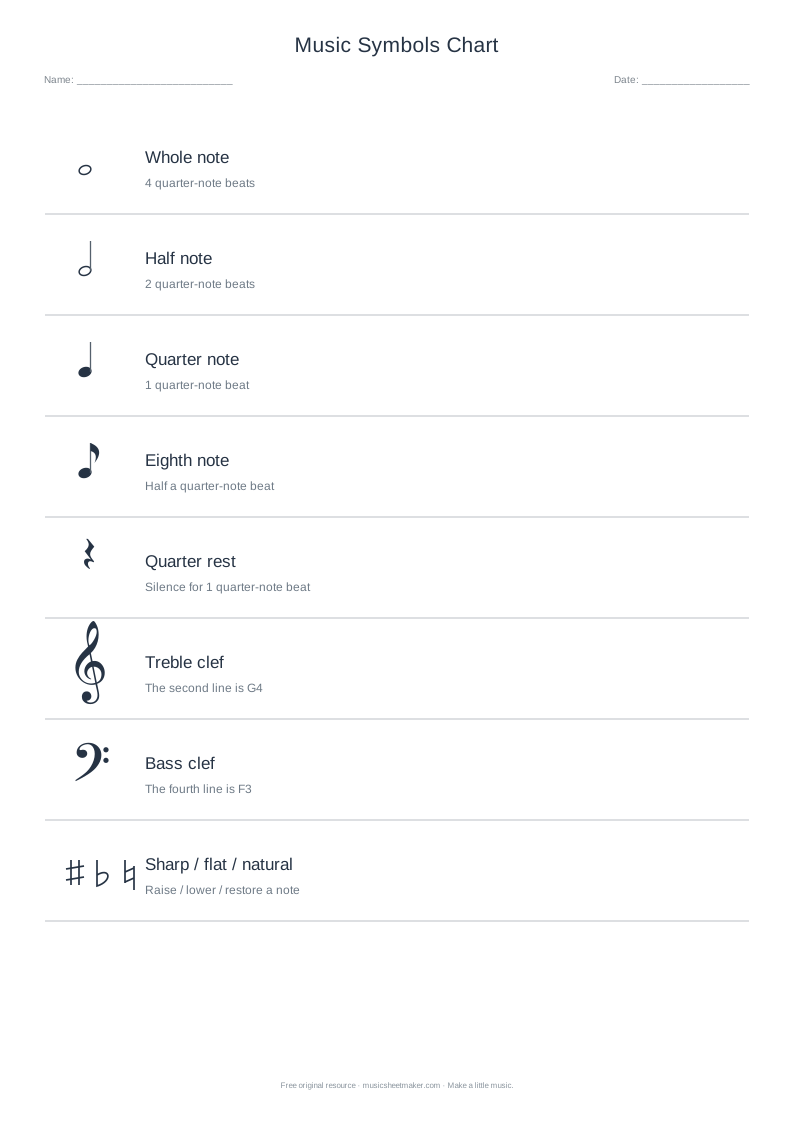
In treble clef, G4 is on the second line from the bottom. Move upward through adjacent positions to A, B, C and so on, using both lines and spaces. Move downward in the reverse order. In bass clef, the dots surround F3 on the fourth line from the bottom. Use that known position as another reference rather than applying the treble pattern to the bass staff.
Try explaining one note aloud: “This is bass clef. The fourth line is F. One space lower is E.” That reasoning is useful even before the learner can name the note instantly. Over time the visual patterns become familiar. A mnemonic can help, but it should not be the only strategy available when a note falls outside the small group the mnemonic describes.
| Position from bottom | Treble pitch | Bass pitch |
|---|---|---|
| First line | E4 | G2 |
| First space | F4 | A2 |
| Second line | G4 | B2 |
| Third space | C5 | E3 |
| Fourth line | D5 | F3 |
Expected answer on the worksheet is the letter alone. Octave numbers in this guide distinguish exact pitches and show why a clef must be checked before naming a position.
Work in small groups and check the process
Begin with four notes rather than the entire page. Name them, check them, then write one of the same notes on blank staff paper. Moving between reading and writing shows whether the position is understood. If a learner repeatedly confuses a line with the space next to it, use a larger staff and a clear landmark before asking for speed.
After a short accurate attempt, add another group of notes or change the order. Keep the focus on reliable recognition. A timed round can be an optional later activity, but speed is not evidence of understanding when the answers are guesses. Ask the learner to explain an unfamiliar position and notice whether the strategy transfers from treble to bass clef.
Make a worksheet part of an active lesson
A teacher can ask learners to compare two notes with the same letter in different registers, or to circle every occurrence of one letter on a system. Another task is to find the notes on a piano after naming them, while making clear that the worksheet answer itself is only a letter name. This connects the symbol to a musical action instead of leaving it as a detached written quiz.
For paired work, one learner explains a note and the other checks the reasoning against a landmark. Exchange roles before looking at the answer view. Mark a recurring mistake with a specific explanation such as “bass reference” or “line versus space,” then practise that concept separately. A clear diagnosis is more helpful than repeating the same full sheet without changing the approach.
Keep the exercise and answer layouts together
Use the title to identify the class, date or small target for the session. Choose the paper size, system count and staff spacing, then download the exercise view. Switch to Answer key and download that view with the same settings. The generated positions match between those views, so changing the layout in between can make checking unnecessarily confusing.
Choose large spacing if the learner needs more room for handwritten names or a teacher’s correction. Only complete systems that fit are drawn. The prepared PDF downloads provide a ready-made page for A4 or US Letter. If you need adjustable note ranges, independent random questions or feedback after each answer, use the interactive note-reading practice tool rather than expecting those settings from this printable.
Make the notation clear enough to assess fairly
Match A4 or US Letter to the paper in the printer and check the preview before printing. Turn browser headers and footers off and use Actual size or 100% when possible. Look closely at noteheads resting on lines and at the bass-clef dots. A reduced or blurry copy can make neighbouring positions hard to distinguish, which changes the task from reading to guessing.
Print one test before making classroom copies. These original exercises are free for personal study, lessons and classroom handouts under the terms. They do not listen to a spoken answer, mark handwriting or provide an assessment of overall musicianship. Use the answer key to check this specific note-letter task, and choose additional activities when you want to practise rhythm, pitch matching or fluent reading of a complete melody.
Note Naming Worksheets: frequently asked questions
Why do the clefs alternate?
Alternation encourages the learner to identify the reference before naming notes. It helps reveal the habit of applying treble names automatically to a bass staff. For a first introduction, a teacher can assign only the systems in the clef already studied and add the others later.
Do the answers include octave numbers?
The printed answer view supplies note letters. Exact pitch names with octave numbers are a separate task. If you add that requirement, explain the naming convention and model one answer so the learner knows whether a letter alone or a full pitch label is expected.
Can I practise without printing?
Yes. You can read the preview and answer aloud or write the names separately. For interactive questions, immediate feedback and locally saved progress, open Note Reading Practice. The worksheet remains useful when you want a physical page to annotate, share in a lesson or keep as a practice record.